
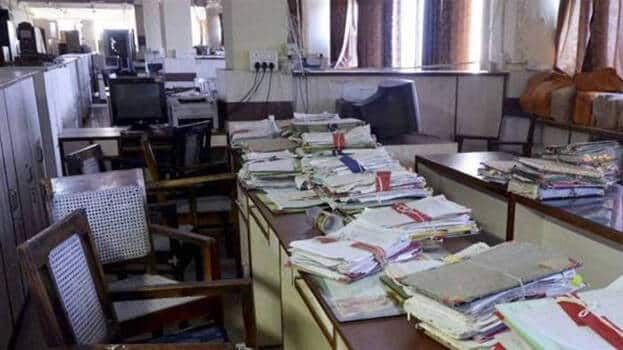
“Everybody’s work is nobody’s work” is a phrase that perfectly captures the lived reality of citizens who interact daily with our government offices, and I write this letter with a sense of frustration shared silently by millions who have learned, through repeated experience, that efficiency, accountability, and dignity are often casualties of an opaque bureaucratic process that has normalized delay, deflection, and denial as standard operating procedures; in far too many public institutions today, responsibility is so fragmented and conveniently undefined that no official feels answerable for outcomes, only for procedures, resulting in a system where files move, but problems do not, counters exist, but service does not, and citizens are reduced to petitioners in offices meant to serve them, not rule over them.
This vacuum of accountability has predictably given rise to a parallel ecosystem of so-called “agents,” “middlemen,” or “dallals,”
These individuals who openly claim to know the ins and outs of the system, not because of any special skill or merit, but because inefficiency itself has become a commodity, and access to what should be free, transparent, and time-bound public services is now monetized through informal channels.
Whether one visits the RTO for a driving license, the FSSAI for a food business registration, the PWD for basic civic clearances, or the electricity department for a connection or correction, the pattern is strikingly similar confusion at the official counter, ambiguous instructions, repeated visits, missing files, and an unspoken but clearly signaled solution: “Talk to someone outside”; these “someone's” are often unmistakable, adorned with thick gold chains, expensive watches, and an air of confidence that comes from proximity to power rather than any legitimate authority, openly negotiating premiums and under-the-table rates for services that are legally defined, procedurally documented, and already paid for through taxes.
This is not merely a matter of petty corruption but a systemic failure where inefficiency is deliberately preserved because it feeds an entire rent-seeking chain, from the lower clerk who delays a file, to the intermediary who “facilitates,” to the official who looks the other way or actively participates, creating a silent but well-understood arrangement in which citizens either comply or suffer indefinite delays; what is most alarming is how normalized this has become, with citizens themselves advising one another to “just get an agent,” as though corruption were a convenience fee rather than a moral and institutional decay, and as though surrendering to this system were an act of pragmatism rather than a forced compromise.
The tragedy lies not only in the financial exploitation of ordinary people but in the erosion of trust in public institutions, where honesty feels naive, rule following feels foolish, and integrity appears incompatible with getting work done; young entrepreneurs, senior citizens, daily wageworkers, and first-time applicants are particularly vulnerable, as they lack both the time and the social capital to navigate this maze, effectively paying a regressive tax for services that were designed to empower them.
Meanwhile, well-meaning officials who wish to work ethically often find themselves trapped in a culture that rewards silence over reform and conformity over courage, reinforcing the idea that “this is how the system works” and discouraging internal accountability; digitization and online portals, while welcome in intent, have not fully solved this problem because processes remain opaque, grievance redressal mechanisms are weak or performative, and escalation paths are unclear, ensuring that the human choke points where discretion exists continue to be exploited; the deeper issue is not a lack of rules but a lack of ownership, where no single desk, officer, or department is answerable end-to-end for service delivery outcomes, allowing delays and denials to be endlessly passed along until the citizen either gives up or pays up.
If public offices functioned with clearly defined service-level commitments, real-time tracking, visible accountability, and meaningful consequences for non-performance, the agent economy would collapse overnight, because it thrives only in darkness, ambiguity, and delay; it is imperative that we recognize this phenomenon for what it truly is the quiet prostitution of public services, where what belongs to the people is sold back to them at a premium, eroding the very idea of governance as a public good.
Reforms must go beyond slogans and portals to include transparent timelines, empowered grievance officers, independent audits of service delivery, protection for whistle-blowers within departments, and strict action against officials found colluding with intermediaries, because without accountability, efficiency is merely a promise and integrity a casualty; a government office should not feel like a marketplace where access is negotiated, nor should gold chains and whispered rates become the symbols of state authority, and until we collectively reject this normalization citizens by refusing to pay, officials by refusing to collude, and institutions by enforcing accountability the phrase “everybody’s work is nobody’s work” will continue to define our bureaucratic reality, not as a warning, but as a resigned acceptance of a system that has forgotten whom it exists to serve.